earth.planets.im
The only world we know of with life — and two official distances to its star.
NASA Science calls Earth the only place we know of inhabited by living things, and the only planet in the solar system with liquid water on the surface. The official fact sheet, and that same facts page, then give two slightly different official distances to the Sun. Both stay in view.
The only world we know of with anyone at home
NASA Science’s Earth facts page opens with the thing that still ought to stop a reader: Earth is the third planet from the Sun, the fifth largest, and “the only place we know of inhabited by living things.” [source] It is also, on the same official page, the only planet in the solar system with liquid water on the surface, and the only planet whose English name does not come from Greek or Roman mythology. The name, that page says, is a Germanic word that simply means “the ground.”
The NASA / NSSDCA Earth Fact Sheet, curated by Dr David R. Williams, is the tabulated counterpart. Volumetric mean radius 6,371.000 km. Mass 5.9722 × 1024 kg. Sidereal orbit period 365.256 days; tropical orbit 365.242 days; length of day 24.0000 hours; sidereal rotation 23.9345 hours; obliquity 23.44 degrees. [source] NASA Science rounds several of those: a rotation every 23.9 hours, 365.25 days to go around the Sun, a tilt of 23.4 degrees. Both official accounts are kept on this desk.
A short history of seeing ourselves
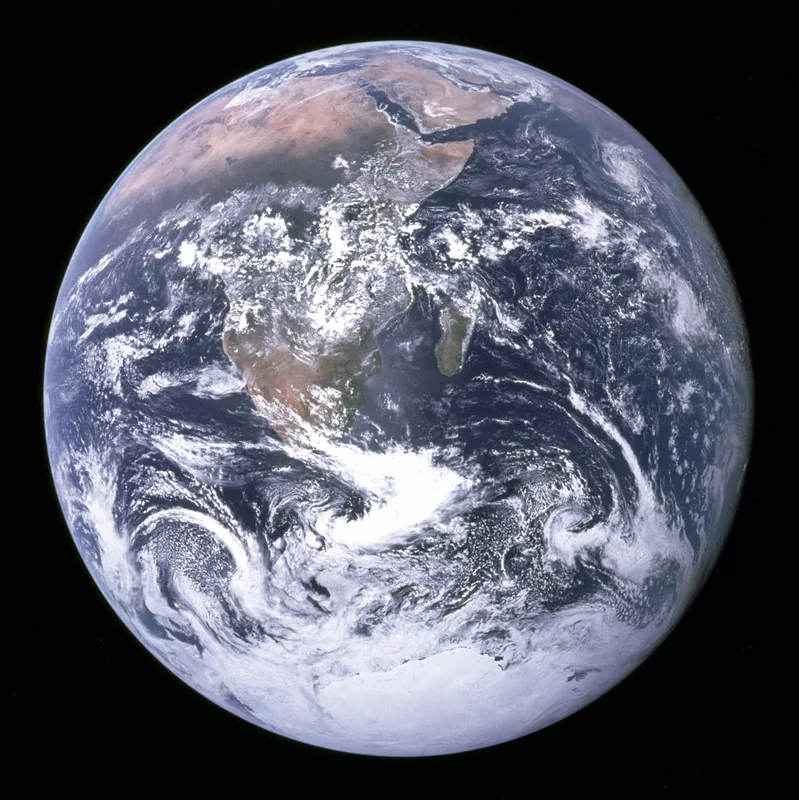
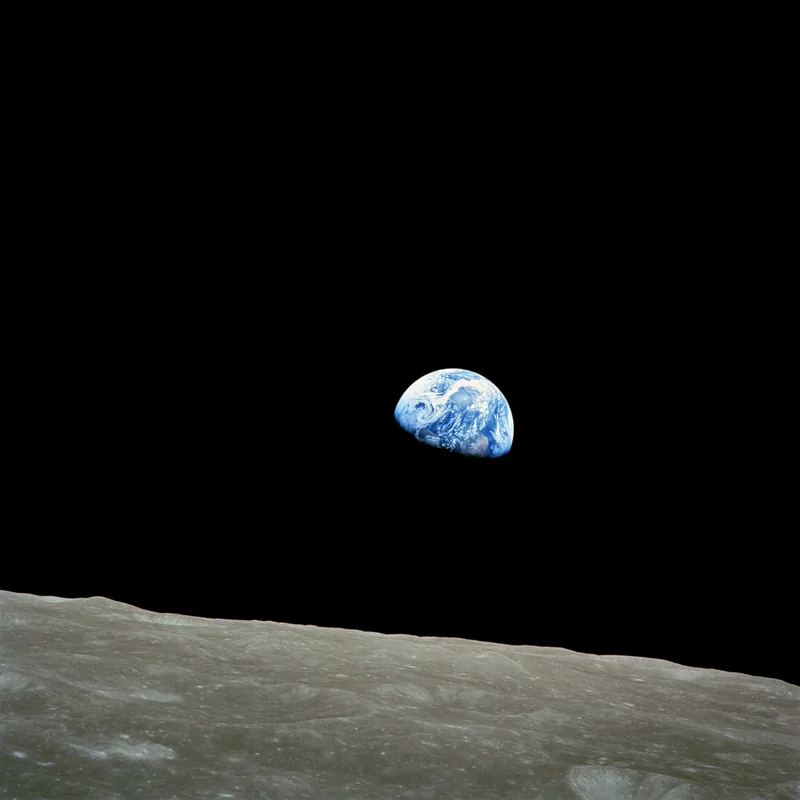
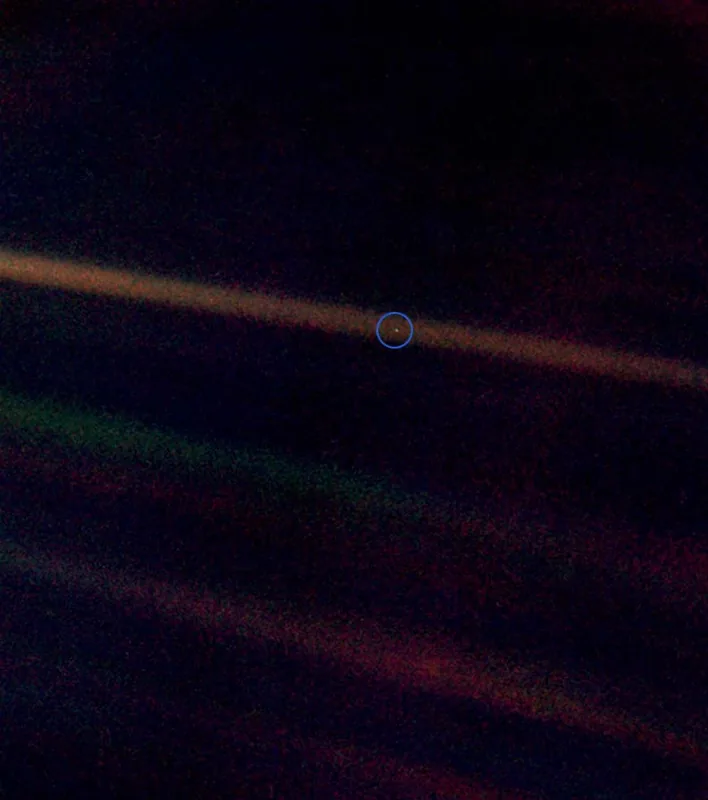
Bill Anders photographed Earth rising over the Moon on 24 December 1968. The Apollo 17 crew, either Harrison Schmitt or Ron Evans — the file will not pretend to know which — photographed the Blue Marble on 7 December 1972 from about 29,400 kilometres. Voyager 1, on 14 February 1990, turned back and found Earth as a speck in a sunbeam. DSCOVR’s EPIC camera, on 6 July 2015, made a full disk from a million miles. Those are photographs with dates, distances and captions, not metaphors first.
How far is an AU?
149.598 million kilometres on the fact sheet; 150,196,428 kilometres on NASA Science. Two official distances, unblended.
A world of liquid water
About 71% of the surface is ocean, and 97% of Earth’s water is in those oceans — as NASA Science tells it.
Earth, seen from outside
Earthrise, the Blue Marble, a pale blue dot, and a later look from Lunar Reconnaissance Orbiter.
Myths versus facts
An AU is not one silently agreed number. A composite is not a single shutter click.
Enjoyed two official distances for an AU, a 71-percent ocean, and a pale blue dot in a sunbeam?
No pop-ups. No intrusive advertising. Just interesting stuff. A little support helps the next planets.im site get built.