The same official surprises, with a little more room to stand and look.
A shorter walk, still from official pages.
The ground beneath us has an unusual name
NASA Science says Earth is the only planet whose English name does not come from a Greek or Roman myth. It means the ground. That is a good sentence to take home.
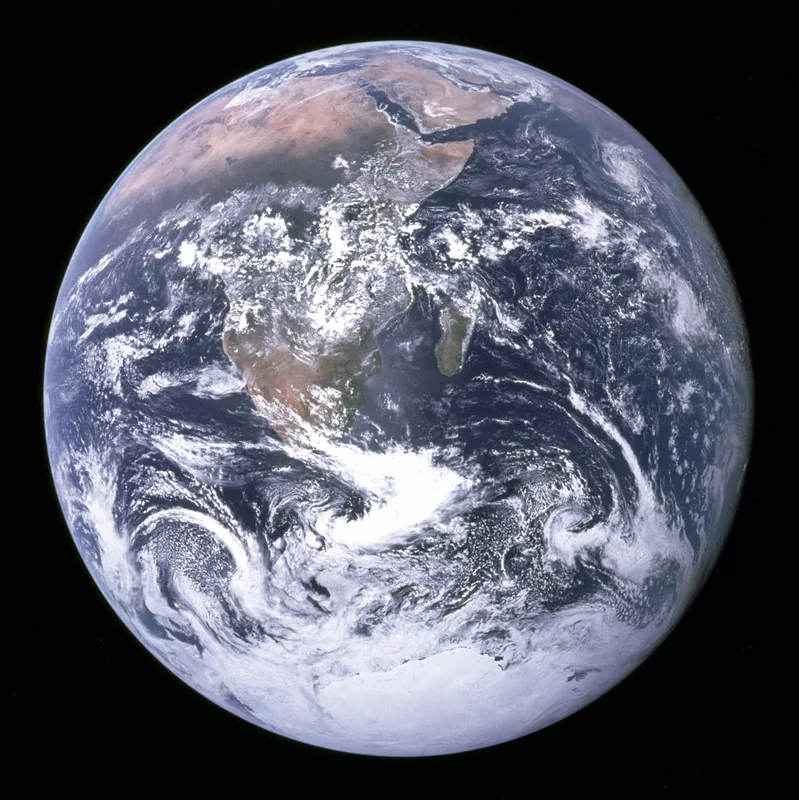
The Blue Marble, photographed on 7 December 1972 by the crew of Apollo 17, en route to the Moon, from about 29,400 kilometres (18,300 miles). It shows Africa, Antarctica and the Arabian Peninsula. The file is careful about the shutter: it was taken by either Harrison Schmitt or Ron Evans. Public domain.Photo: NASA / Apollo 17 crew (Harrison Schmitt or Ron Evans) · Public domain · NASA / Wikimedia Commons
Most of the world is ocean
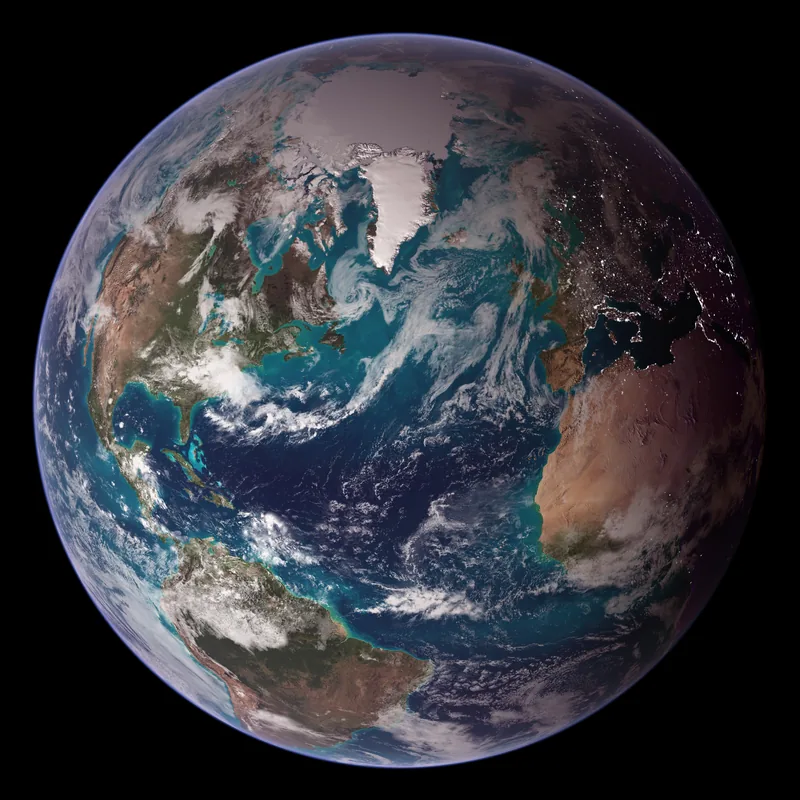
About 71% of the surface, on NASA Science’s telling, and 97% of the water is in those oceans. The longest mountain range is underwater. So is most of Mauna Kea, which is still taller from base to summit than Everest.
A western-hemisphere Blue Marble, released on 9 October 2007, from NASA images by Reto Stöckli based on Terra MODIS data. The official release speaks of a day’s clouds, the living ocean, and a view that is a fusion of science and art. A composite, not a single shutter click — and labelled as such. Public domain.Photo: NASA / Goddard Space Flight Center / Reto Stöckli, based on data from NASA and NOAA, Terra MODIS · Public domain · NASA/GSFC / Reto Stöckli / Wikimedia Commons
How the planet looks from somewhere else
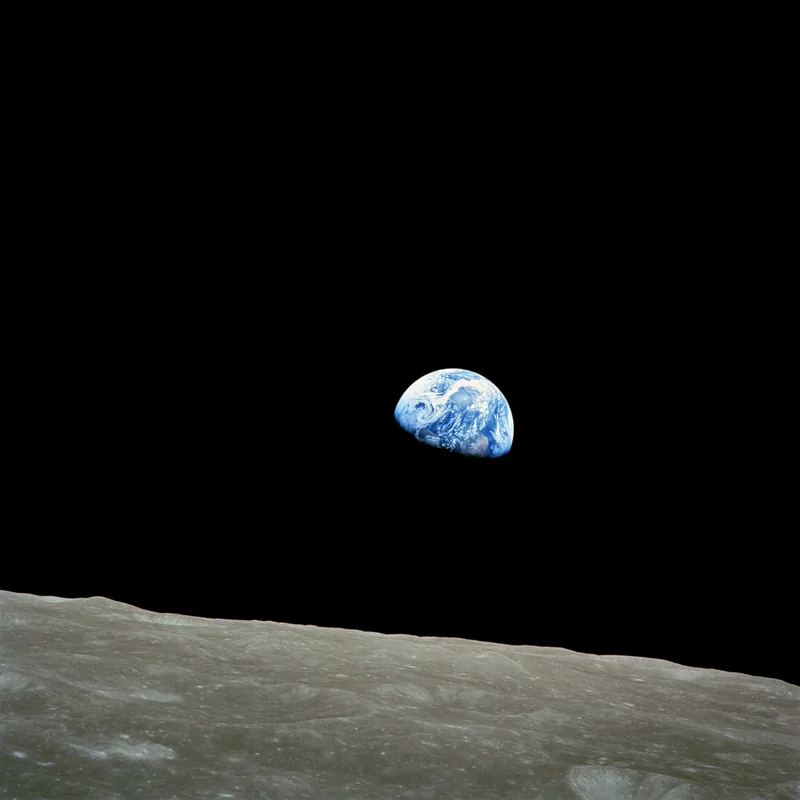
Earthrise on Christmas Eve 1968. The Blue Marble four years later. A speck in a sunbeam in 1990. The from-outside page keeps the dates and the captions. The AU desk keeps two official distances to the Sun in the same room.
Earthrise, photographed by Apollo 8 crewmember Bill Anders on 24 December 1968, at 16:40 UTC, while in orbit around the Moon. The file notes that this is the Earth rising for the third time above the lunar horizon, and that the horizon is about 780 kilometres from the spacecraft. Public domain.Photo: NASA / Bill Anders · Public domain · NASA / Bill Anders / Wikimedia Commons