Signature desk
How far is an AU?
An astronomical unit is the Earth–Sun distance — and two official NASA pages do not give quite the same number for it. This desk puts the fact sheet’s 149.598 million kilometres beside NASA Science’s 150,196,428 kilometres, and does not invent a third figure in between.
How far is an AU?
An astronomical unit is defined, on NASA Science’s facts page, as the distance from the Sun to Earth, “because one astronomical unit (abbreviated as AU), is the distance from the Sun to Earth.” [source] That ought to make the length of an AU a single official number. It does not, quite.
The fact sheet’s semimajor axis is 149.598 × 10⁶ km. [source] NASA Science’s facts page gives 93,327,712 miles / 150,196,428 kilometres, and a one-way light time of 8.350022 minutes. On the same official page, the narrative also says “about 93 million miles (150 million kilometres)” and “about eight minutes.” This desk uses each official figure as it was written. It does not average 149.598 million and 150,196,428 into a third, unofficial distance.
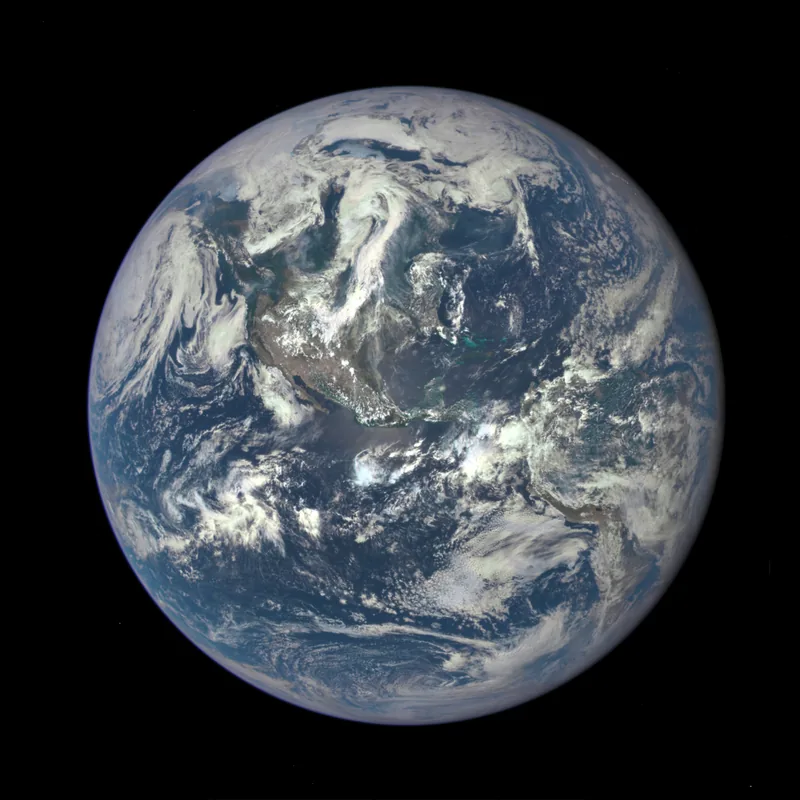
A year, a day, and a tilt — also told two ways
The fact sheet’s sidereal orbit period is 365.256 days; the tropical orbit period is 365.242 days; the length of day is 24.0000 hours; the sidereal rotation period is 23.9345 hours; the obliquity to orbit is 23.44 degrees. [source] NASA Science says Earth completes one rotation every 23.9 hours, takes 365.25 days to complete one trip around the Sun, and has an axis tilted 23.4 degrees, and that this tilt causes the yearly cycle of seasons. [source] The leap-day explanation on that page — the extra quarter of a day, a leap day every four years — belongs to Science’s 365.25, not to a blended year.
The water that makes this particular AU’s planet unusual is on the water page. The photographs of the planet from outside are on Earth, seen from outside.
Enjoyed two official distances for an AU, a 71-percent ocean, and a pale blue dot in a sunbeam?
No pop-ups. No intrusive advertising. Just interesting stuff. A little support helps the next planets.im site get built.